
How Dr. Jennifer Stewart Transformed Her Practice
October 13, 2026

In today's eye care practices, efficiency is everything.
Patients expect a seamless experience, while doctors and staff need workflows that reduce stress and save time. For Dr. Jennifer Stewart, O.D., the key to achieving both was building a new practice designed around efficiency, technology, and patient trust.
REIMAGINING THE PRACTICE MODEL
After years of running a large group practice, Dr. Stewart recognized that bigger wasn’t always better. She wanted to return to patient care on her own with fewer staff, longer appointment times, and a stronger focus on the doctor-patient connection.
Her vision was clear: a practice with the feel of a boutique, but the efficiency of a modern clinic.
“I knew I wanted fewer staff, longer appointments, and more time face-to-face with patients,” she explains. “That vision shaped every decision in the new practice.”
FROM FOUR TECHS TO ONE AND A HALF
At her former practice, four technicians were needed to keep patient flow moving. In her current practice, she operates smoothly with just one and a half staff.
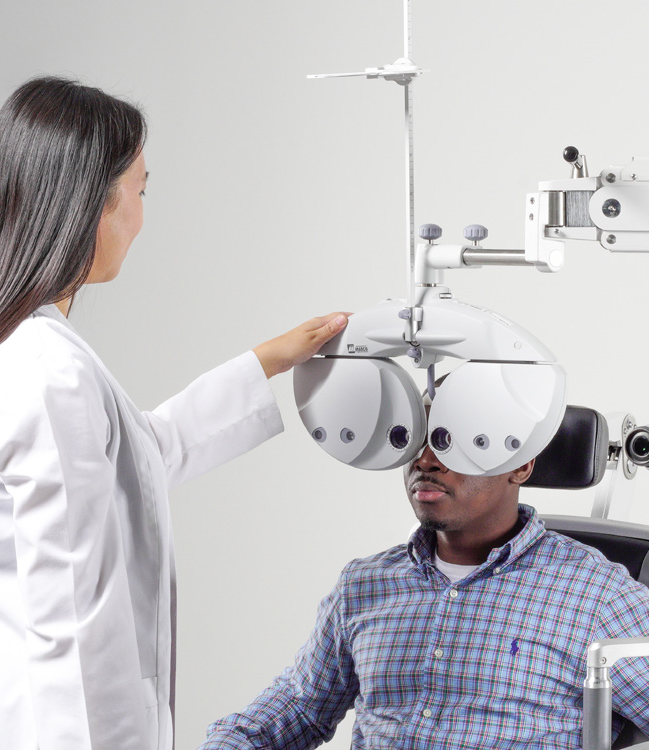
The difference? Digital refraction and integrated systems. Patient data now flows automatically from pretest to the exam lane and into optical.
No re-entry, no scribes, no extra staff needed.
“I pretest patients myself sometimes, and I realized I don’t need a big team to deliver a great experience,” Dr. Stewart says. The result is a calmer pace, fewer moving parts, and more meaningful interactions with patients.
CHOOSING THE RIGHT EQUIPMENT PARTNER
For Dr. Stewart, building a new practice also meant facing countless equipment choices. That’s where the right consultation and finding someone she could trust made all the difference. Instead of pushing the most expensive options, her Marco Lombart representative, Rich White, guided her through the decision-making process, eliminating features she didn’t need and focusing on the tools that matched her patient base.
“I told him what I wanted, and he told me what not to buy,” she recalls.
And when questions came up after installation, support was just a text away.
“That ongoing support gave me the confidence to run a leaner team without worrying about downtime,” Dr. Stewart explains.
PATIENTS NOTICE THE DIFFERENCE
While efficiency benefits the practice, patients notice it too.
Dr. Stewart describes how patients react when their information appears seamlessly in the exam room: “I tell them, ‘Everything we collected earlier has magically appeared here.’
They’re wowed every time.”
One experience stood out. An immunocompromised patient recovering from a stem cell transplant was nervous about close contact. Thanks to her digital refraction system, Dr. Stewart could refrain from across the room while still providing precise results. “For him, that meant feeling safe and cared for,” she says.
A SUSTAINABLE FUTURE
Today, Dr. Stewart sees the volume of patients she wants to see at a pace that provides an optimal, high-end experience. “It feels sustainable,” she says.
“My patients feel heard and cared for, and I leave with energy for my family.”
Her experience demonstrates how the right technology, paired with the right support, can transform practice efficiency and patient care.
LESSONS FOR TODAY’S OD
Dr. Stewart’s story offers important lessons for practices navigating efficiency and growth:
- Choose partners, not just vendors.
- Invest in technology that fits your patient base and your goals, not just what’s “new.”
- Efficiency is not just about speed; it’s about freeing time for patient care.
- The relationship doesn’t end with the installation. Find a partner who will provide ongoing support.
