
Voices of Vision: How Dr. David Moore, O.D. Uses Technology to Practice on His Own Terms
October 13, 2026
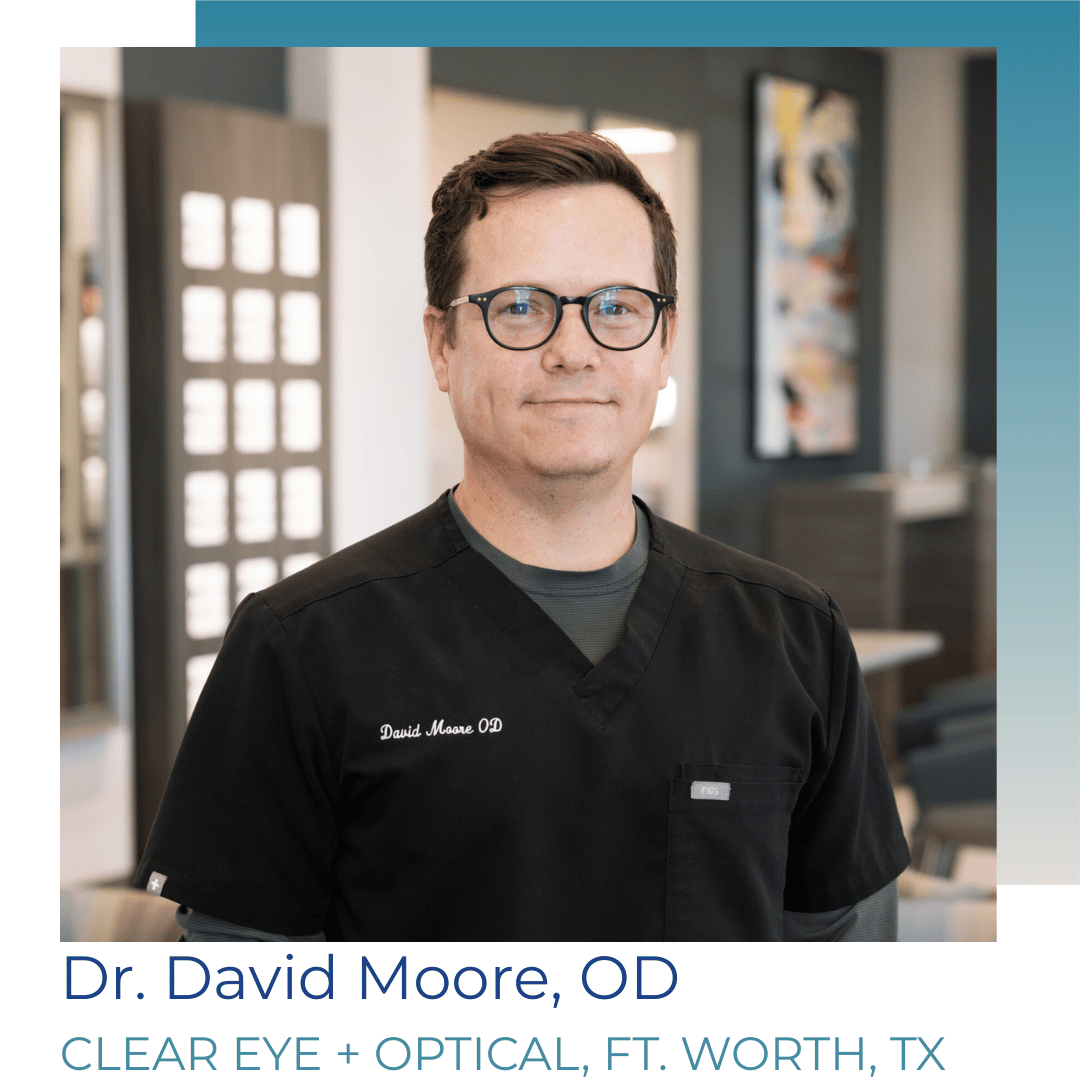
For Dr. David Moore, OD, technology has never been about chasing the latest trend. It has always been about creating a practice that can grow, adapt, and remain efficient without compromising patient care.
Seventeen years ago, when he opened CLEAR eye + optical in Texas, growth looked very different than it does today.
“I graduated 17 years ago and hung a shingle,” Dr. Moore recalls. “It was just me and my wife for the first three months. I was the tech, the optician, and the doctor.”
Today, CLEAR eye + optical operates multiple locations, offers specialty services such as myopia management and dry eye care, and continues to evolve alongside changing patient expectations. Through every stage of growth, one principle has remained constant: investing in technology that improves efficiency, supports accuracy, and integrates seamlessly into daily practice.
EFFICIENCY THAT CHANGES EVERYTHING
For Dr. Moore, the value of technology isn’t measured by how impressive it looks. It’s measured by how much it improves the day-to-day experience for doctors, staff, and patients.
“It’s not even usefulness, it’s efficiency,” he says. “The system is faster. I can multitask. I can chart while I’m refracting.”
That efficiency became especially important during a recent period when one of his doctors was out on maternity leave.
“I was seeing patients about 50 hours a week, six patients an hour,” he says. “I was able to do it without a scribe because the system is so much faster.”
Despite the demanding pace, accuracy remained consistent.
“Our remake rate is less than two percent, maybe even less than one percent,” Dr. Moore notes. “That tells you it works, it’s efficient, and it’s accurate.”
For him, efficiency isn’t about seeing more patients for the sake of volume. It’s about creating workflows that reduce friction, protect clinical confidence, and help prevent burnout.
TECHNOLOGY THAT SUPPORTS GROWTH
As CLEAR eye + optical expanded into new clinical services, Dr. Moore needed technology that could support growth without disrupting operations.
“Every time we’ve added a new service or piece of equipment, the integration has been great,” he says. “It all works together. We just don’t have problems with those integrations.”
In his practices, technicians perform lensometry, autorefractor testing, and axial length measurements before patients enter the exam room.
“They don’t refract, but they do everything else up to that,” he explains. “It just works.”
Equally important is how easily staff can adapt to new technology.
“That part’s easy,” he says. “Even skipping from one generation of technology to the next, it’s seamless. We can train people quickly, and it’s not a big deal at all.”
For growing practices, that ability to implement new technology without creating operational headaches can make all the difference.
TURNING DATA INTO CONFIDENCE
One area where technology has had a particularly meaningful impact is myopia management.
When Dr. Moore first considered expanding his myopia management program, his concerns weren’t about the science. They were about proving outcomes and fitting the service into an already busy workflow.
“It felt squishy,” he admits. “How do I prove it’s working? How do I integrate it without disrupting flow?”
The answer came through axial length measurement.
“This was the first device I looked at that felt as easy to use as an autorefractor,” he says. “If a patient can do one, they can do the other.”
More importantly, it gave him objective data he could share with families.
“I can show parents data. Trends. I can say, ‘Here are the numbers. This is working for your child.'”
Instead of relying solely on explanations, parents can see measurable progress over time. That transparency creates confidence, improves understanding, and helps families stay engaged in treatment.
“The educational value alone makes it worth it,” Dr. Moore says. “When parents understand the data, adoption naturally goes up.”
Today, axial length measurement has become a standard part of pediatric care in his practice.
“It’s just part of the exam now,” he says. “Parents are most interested in what that scan is going to look like in three months.”
TECHNOLOGY PATIENTS NOTICE
While efficiency and clinical outcomes are important, Dr. Moore has also seen another benefit from investing in modern technology: patients notice.
In both larger markets and smaller communities, advanced technology can become a differentiator that reinforces trust and generates referrals.
“Every technology investment became a referral driver,” he says. “Patients talk, especially in smaller communities.”
When patients see a practice investing in modern, integrated care, it sends a message about quality, innovation, and commitment to better outcomes.
THE VALUE OF PARTNERSHIP
Over nearly two decades, Dr. Moore has worked closely with Advancing Eyecare as his practice has grown and evolved.
For him, the relationship has never been about individual equipment purchases. It’s been about consistency and support over time.
“Advancing Eyecare has been our first call for 17 years,” he says. “The consistency, reliability, and support are why we keep coming back.”
That support often extends beyond installation day.
When implementing axial length measurement, Dr. Moore wanted additional guidance on how to best integrate the technology into his workflow.
“We had the device sitting there for about a week because I hadn’t decided how I wanted to use it yet,” he says. “So we reconnected with the software trainers and asked for more resources.”
The response was immediate.
“They gave us names of other doctors to talk to,” he explains. “That all happened in short order. Usually that process takes months. This didn’t.”
Even when solutions fall outside of Advancing Eyecare’s product portfolio, the relationship continues.
“Even when it’s not their equipment, they still help me find the right solution,” he says. “That’s real partnership.”
INVESTING FOR THE FUTURE
Like many practice owners, Dr. Moore understands the financial pressures facing eyecare today.
“Overhead is higher in pretty much every category,” he says. “Staff costs more. Insurance costs more. We can’t control reimbursement.”
His solution is straightforward.
“We have to be more efficient. If you don’t want to see more patients and make it harder on yourself, you have to incorporate technology.”
He encourages younger doctors to think beyond the initial purchase and consider the long-term value technology can create.
“I always tell new doctors: be an early adopter,” Dr. Moore says. “You get more comfortable with it. Integration is easier. You get more support.”
Looking back on nearly two decades of practice ownership, he has no regrets.
“I’ve never regretted it with any equipment I’ve purchased that’s helped us become more efficient,” he says.
Technology will continue to evolve. Patient expectations will continue to rise. But Dr. Moore’s experience demonstrates that when technology, workflow, and partnership work together, growth becomes far more sustainable.
After 17 years, the lesson is simple: invest in tools that help you practice on your own terms—and partner with people who help you get the most from them.
LESSONS FOR TODAY’S OD
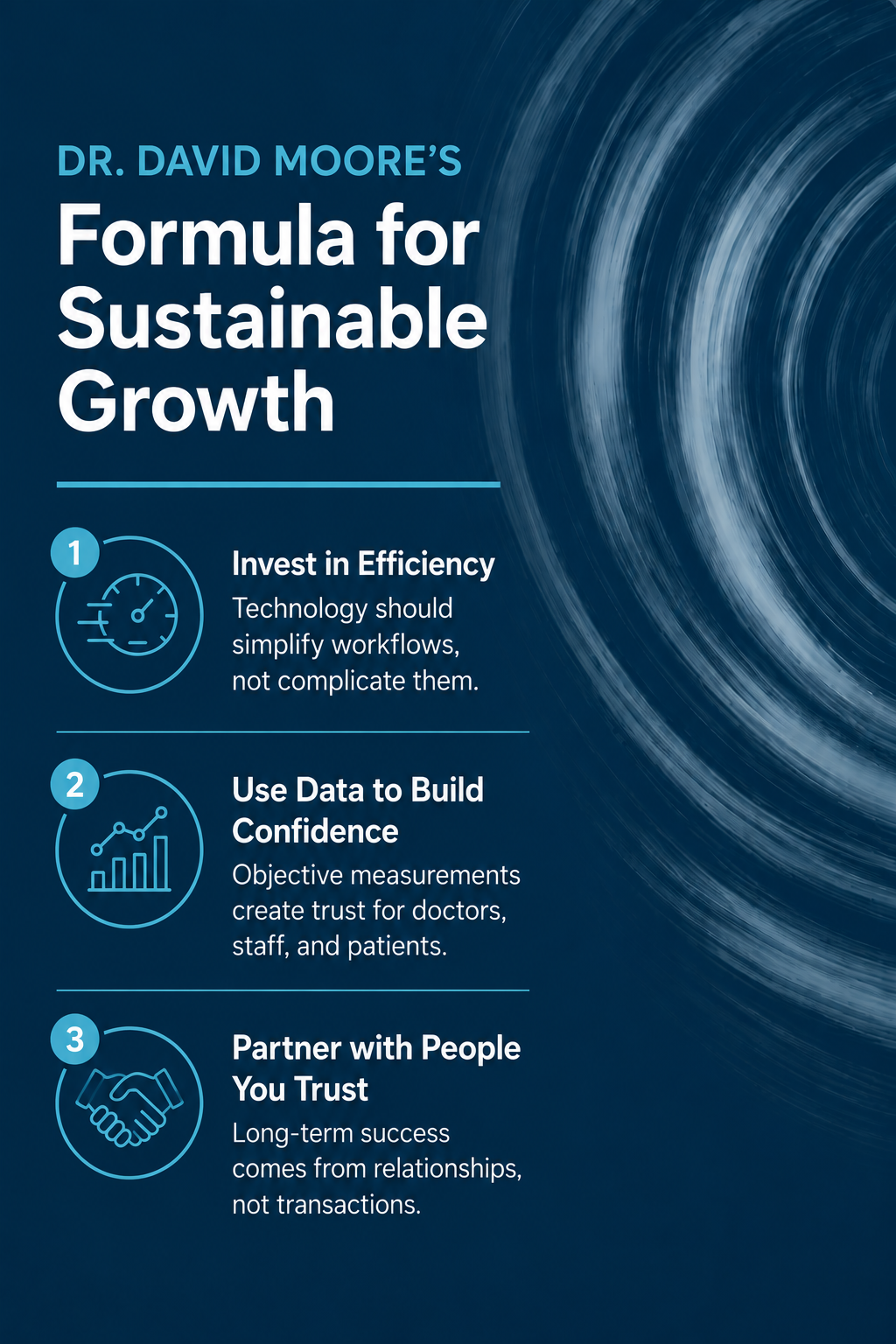
- Invest in efficiency
- Use data to build confidence
- Partner with people you trust
