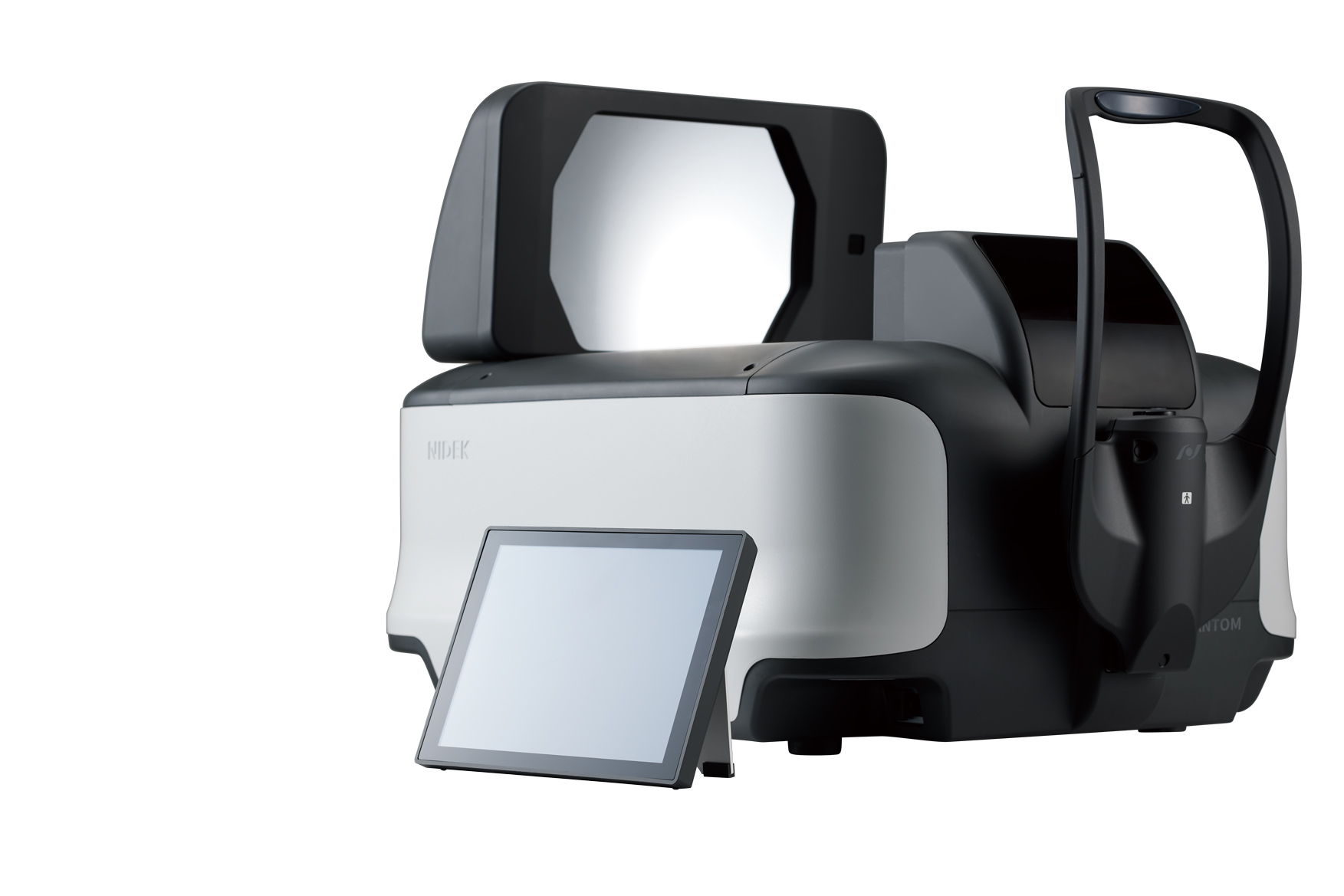
AR Sphere Range-17.00 to +15.00 D at 12 mm vertex distance
AR Sphere Increments0.01, 0.12 and 0.25 D
AR Sphere Accuracy±0.20 to 0.25 D
AR Cylinder Range0 to ±6.00 D at 12 mm vertex distance
AR Cylinder Increments0.01, 0.12 and 0.25 D
AR Cylinder Accuracy±0.25 D
AR Axis Range0°–180°
AR Axis Increments1° and 5°
AR Axis Accuracy±3°
Pupillary Distance Range48–80 mm at infinity
Pupillary Distance Increment1 mm
Pupillary Distance Accuracy±1.0 mm
Pupil Size Range2.0–10.0 mm
Pupil Size Increment0.1 mm
Pupil Size Accuracy±0.2 mm
Minimum Measurable Pupil Diameter2 mm
Subjective Sphere Range-17.00 to +15.00 D
Subjective Sphere Increment0.25 D
Subjective Sphere Accuracy±0.17 to 0.59 D
Subjective Cylinder Range0 to ±5.00 D
Subjective Cylinder Increment0.25 D
Subjective Cylinder Accuracy0.12 to 0.36 D
Subjective Refraction Range NoteMeasurement range varies depending on the combination of sphere and cylinder values
Subjective Axis Range0°–180°
Subjective Axis Increments1° and 5°
Subjective Axis Accuracy±2° to 9°
Cross CylinderSelectable increments of ±0.25 and ±0.50 D
Fixed Cross Cylinder±0.50 D when the minus axis is 90°
Near Chart Presentation DistanceMetric: 30–99 cm in 1 cm increments; Imperial: 12–38 in in 1 in increments
Distance Chart Presentation DistanceMetric: 1.0–10.0 m in 0.1 m increments; Imperial: 3.3–32.8 ft in 0.1 ft increments
Addition Range0–9.00 D
Addition Increment0.25 D
Addition Range NoteThe sum of the spherical equivalent value and addition value must not exceed +16.00 D
Vertex Distance0, 12.00 and 13.75 mm
Chart TypesLandolt ring, Tumbling E, Japanese hiragana and letters
Visual Acuity Decimal Range0.04–2.0
Visual Acuity 6-Meter Range150–3
Visual Acuity 20-Foot Range500–10
Visual Acuity LogMAR Range1.40 to -0.30
Visual Acuity 5-Mark Record Range3.6–5.3
Chart Size AccuracyStandard value ±5%; ±10% for VA 2.0
Chart Background Luminance80–320 cd/m²
Chart Background Uneven LuminanceLess than 30%
Chart Correlated Color Temperature6,000 ±1,000 K
Chart ContrastWhite/black contrast ratio of 74% or higher
Chart ResolutionPixel size must be 0.25 minutes or less of visual angle at 0 diopters
Ocular Alignment Screening Range0–20Δ
Ocular Alignment Screening Increment1Δ
Ocular Alignment Screening Accuracy±2Δ to 5Δ using a model eye
USB Ports4
LAN Ports2
Input Voltage100–240 V AC ±10%
Frequency50/60 Hz
Power Consumption180 VA
Device Dimensions574 mm W x 782 mm D x 564 mm H
Device Mass68 kg
Operating Temperature10–35°C (50–95°F)
Operating Humidity30–90% non-condensing
Operating Atmospheric Pressure800–1,060 hPa
Installation EnvironmentIndoor space equipped with air conditioning or an equivalent environment
Installation RequirementsFree from harmful dust, gas, smoke, direct sunlight, vibration, impact and water exposure; not directly beneath lighting equipment
Unpacked Storage Temperature-10 to 55°C (14–131°F)
Unpacked Storage Humidity10–95% non-condensing
Unpacked Storage Atmospheric Pressure700–1,060 hPa
Packed Storage and Transport Temperature-30 to 70°C (-22 to 158°F)
Packed Storage and Transport Humidity10–95% non-condensing
Packed Storage and Transport Atmospheric Pressure500–1,060 hPa
Wireless LAN StandardIEEE 802.11a/b/g/n/ac (2.4 GHz and 5 GHz)
Wireless LAN Transmit Power17 dBm for 802.11b CCK at 11 Mbps; 15 dBm for 802.11g OFDM at 54 Mbps; 13 dBm for 802.11n MCS7 HT20; 13 dBm for 802.11n MCS7 HT40; 13 dBm for 802.11ac OFDM at 54 Mbps; 9 dBm for 802.11ac NSS1 MCS9 VHT80
Wireless LAN Frequency2.4 GHz: 2.4–2.4835 GHz; 5 GHz: 5.15–5.825 GHz
Wireless LAN ModulationOrthogonal Frequency Division Multiplexing (OFDM) and Direct Sequence Spread Spectrum (DSSS)
Wireless LAN Link Speed802.11n: maximum 110 Mbps; 802.11ac: maximum 255 Mbps
Wireless LAN Access MethodAd-hoc mode and infrastructure mode
Wireless LAN SecurityWPA-PSK, WPA2-PSK and WPA/WPA2
Compatible LensmetersLM-1800P, LM-1800PD, LM-7 and LM-7P
Compatible RefractorRT-6100
Compatible Memory BoxMEM-200
IncludedDevice, monitor, arm, wireless LAN and custom table
Expected Service Life8 years from initial operation with proper maintenance, inspection and consumable-parts replacement